Zhejiang Tenrony Electricity Co., Ltd.
Dry-Type Transformer

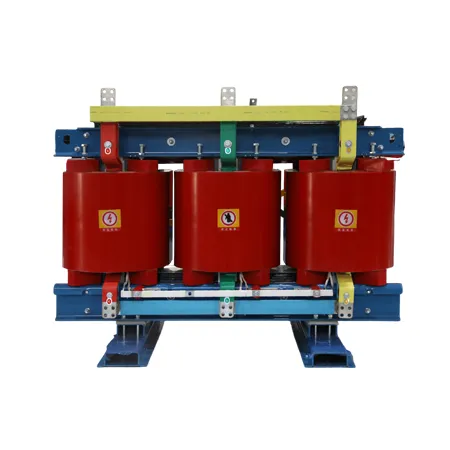
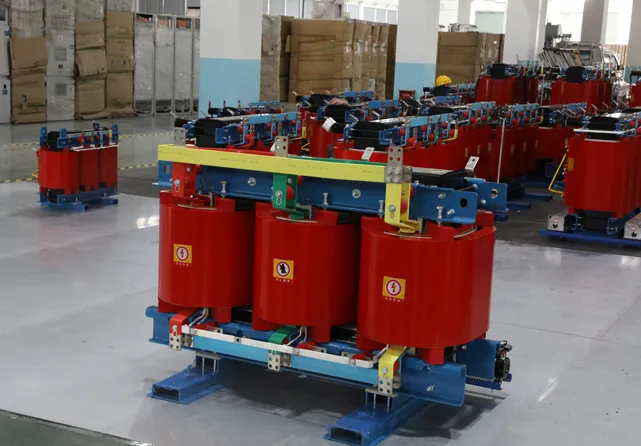
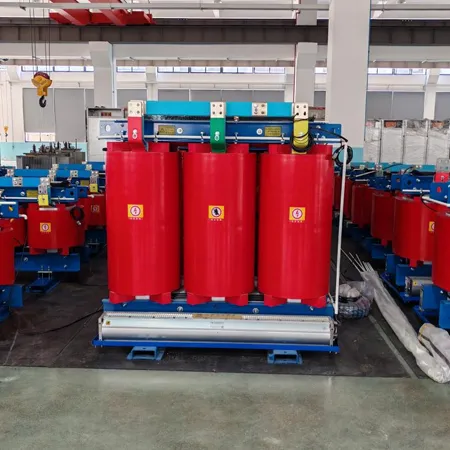
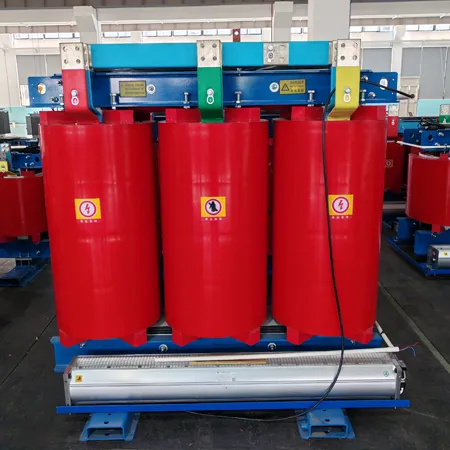
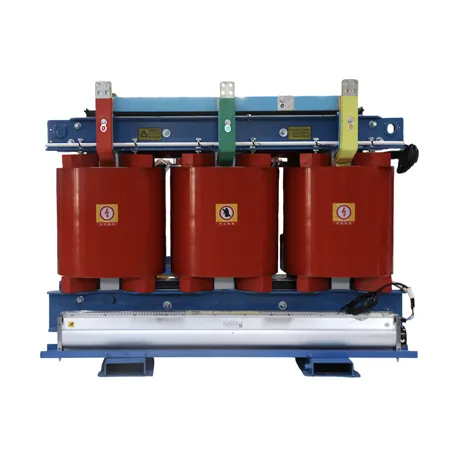
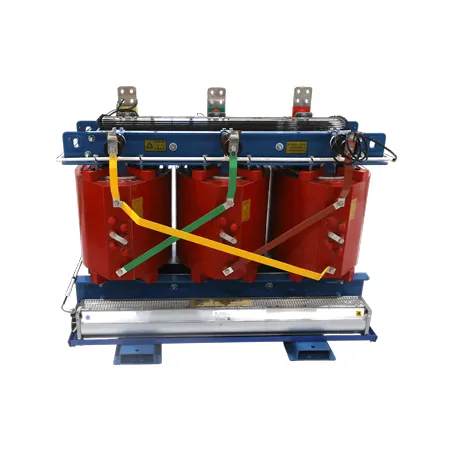
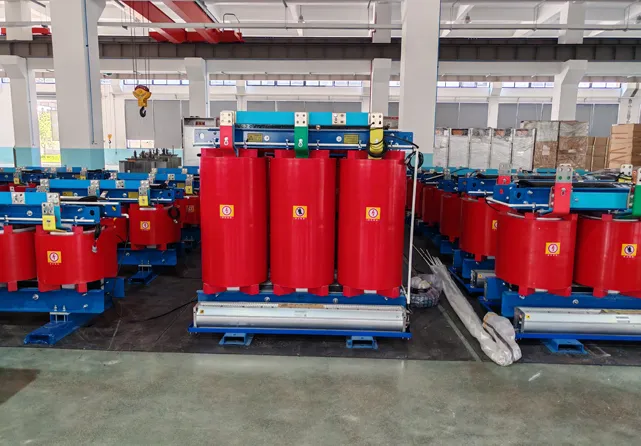
Dry-type power transformers are widely used electrical equipment in power systems. Compared with oil-immersed transformers, dry type electrical transformers have advantages such as fire prevention, explosion-proof, pollution-free, and maintenance-free. Dry type transformer cooling methods mainly include natural air cooling (AN) and forced air cooling (AF). The dry type power transformer is suitable for places with high safety and environmental protection requirements, such as high-rise buildings, hospitals, schools, shopping malls, and other densely populated areas, as well as some industrial places with special fire protection requirements.

Key Features of Dry-Type Transformer

Key Features of Dry-Type Transformer
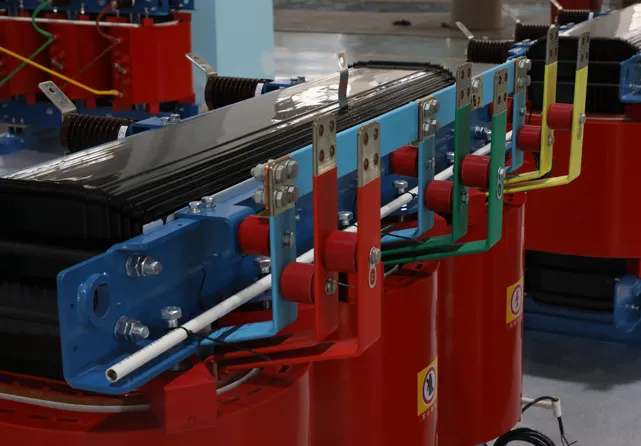
  1. Dry type transformer manufacturers adopt a no-filler insulation design, with coils encapsulated in epoxy resin, featuring flame retardancy, fire resistance, explosion-proof, maintenance-free, and pollution-free properties. The dry type power transformer has a compact structure and can be directly installed at the load center.

  2. Dry type transformer manufacturers adopt a scientifically designed casting process reasonable, which can reduce partial discharge, lower noise, and enhance heat dissipation. Under forced air cooling conditions, dry type electrical transformers can operate at 140% of the rated load for a long time.

  3. The dry type power transformer is equipped with an intelligent temperature control device, featuring fault alarm, over-temperature alarm, over-temperature trip, and black start functions. Premium products from dry type transformer manufacturers can also be connected to a computer via an RS-485 serial port for centralized monitoring.

  4. Dry type electrical transformers have a wide range of applications and can be used in power transmission and transformation systems, as well as in important places such as hotels, airports, and high-rise buildings. The dry type transformer series can also adapt to harsh environments such as subways, smelters, and ships.

Advanced Safety Features of Tenrony Dry-Type Transformers

Advanced Safety Features of Tenrony Dry-Type Transformers

The SC(B) series three-phase epoxy resin cast dry-type and dry-type on-load transformers produced by Tenrony are products designed and manufactured in accordance with national standards by introducing advanced dry-type transformer production technology from abroad. The core of our dry type electrical transformers is manufactured by advanced equipment, such as fully automatic transverse shearing lines, and the windings are wound by digital foil high and low voltage winding machines. The dry type transformer's coils are cast by fully automatic digital casting equipment. The scientific casting process enables the resin to fully penetrate between turns, layers, and sections. How to prevent the casting body from cracking, control the generation of residual bubbles in the casting body, and reduce the partial discharge to the minimum limit has always been a major issue for dry-type transformer manufacturers at home and abroad, and manufacturing dry type transformer is a key technology for resin cast dry-type transformers. As specialized dry type transformer manufacturer in China, Tenrony has successfully solved this cutting-edge problem through repeated production practices and frequent physical and chemical tests. The technical performance indicators of the dry type power transformer fully comply with the national standard GB1094.11-2007, and the technical parameters comply with the GB/T10228-2008 standard, and also conform to the principles of GB1094.11, GB/T10228, IEC60076, etc. The technical performance of the dry type power transformer can reach the level of HTT products. Our dry type transformer for sale features high efficiency and energy saving, impact resistance, good flame retardancy, low partial discharge, strong overload capacity, small size, low noise, automatic temperature control, no pollution, and maintenance-free. Contact us and direct order from the dry type transformer factory.

Dry-Type Transformer FAQs

  • Q

    What is a transformer?

    A

    A transformer is a stationary electric device that,based on the principle of electromagnetic induction, enable to exchange and transfer of electromagnetic energy between two or more winding circuits linked to a core.

  • Q

    How can users choose the right transformer?

    A

    For customers, if only low costs is considered,oil immersed transformers can be considered. If safety operation, maintenance costs, and environmental protection are taken into account, it is recommended that customers use dry-type transformers.

  • Q

    What components make up a dry-type transformer?

    A

    A dry-type transformer is mainly composed of the following components:

    1.Core;2.Windings; 3.Fastening and supporting parts; 4.Leads; 5.Insulation; 6.Cooling device:temperature controller and fan;7.Protective device: transformer casing. 

  • Q

    What does SCZB9-1000/10 mean?

    A

    SCZB9-1000/10 is a three-phase dry-type on-load tap-changing transformer with a capacity of 1000 KVA. Dry type transformer's high-voltage winding is wire-wound with a voltage level of 10 kV; the low-voltage winding is foil-wound with a voltage level of 0.4 kV.

  • Q

    What are the differences between the 11.9 type and the 10 type products?

    A

    The no-load loss of the 9 type product is in accordance with the GB/T10228-2008 standard.

    The no-load loss of the 10 type product is on average 10% lower than that of the 9 type product, and the load loss is on average 5% lower than that of the 9 type product.

  • Q

    What are the manufacturing processes of the two types of transformers?

    A

    ① Winding process

    ② Core production process

    ③ Assembly process

  • Q

    Which parameter affects the service life of dry-type transformers? How can it be controlled?

    A

    Temperature. Generally, forced air cooling and reducing the load are adopted for control.

  • Q

    What is the maximum temperature rise of your company’s dry-type transformer?

    A

     The maximum temperature of dry type transformer is at F-class.

  • Q

    How does our company dry-type transformer reduce loss?

    A

    By optimizing the design,selecting high-quality materials, and improving the processing and manufacturing techniques.

  • Q

    How can noise from dry-type transformer be reduced?

    A

    There two methods:

    1, setting up sound insulation walls around the transformer can significantly lower the sound of the transformer.

    1. Taking measures in the manufacturing process, such as using step joints for the core,bonding the cut edges with resin paint after stacking the core; binding and coating the core columns with resin fixing paint; and using silicon rubber plates for vibration reduction at the connection points of each component, can be effectively reduce noise.

  • Q

    What are main types of dry-type transformers?

    A

    The main types of Dry-type transformers include: dry-type power transformers,distribution transformers, traction rectifier transformers, grounding transformers, arc suppression coils and other special dry-type transformers, non-standard dry-type transformers, dry-type reactors, etc.

  • Q

    What are the common widths and maximum thicknesses of copper and aluminum foils?

    A

    The common width of copper foil is 600 to 1000mm, with a maximum thickness of 2mm.

    The common width of aluminum foil is 600 to 1200mm, with a maximum thickness of 2mm.

  • Q

    What is the vacuum degree that the pouring tank can reach when pouring the coil?

    A

    0.2mbar.

  • Q

    What is the insulation class of dry-type transformers?what is the heat resistance index of this class?

    A

    Generally, it is class F, with and insulation system temperature of 155°C.

  • Q

    What is the overload capacity of a dry-type transformer?

    A

    The overload capacity of a dry-type transformer refers to the duration for which the transformer can continuously operate under conditions exceeding its rated load.

  • Q

    What conditions must be met for parallel operation of products to be energized and run?

    A

    Three conditions must be met:1. The connection groups are the same. 2.The rated voltage ratios are the same. 3. The rated impedance voltages are the same(allowing a deviation of ±10%)

  • Q

    How to solve the problem of arc and discharge when the dry type power transformer is powered on?

    A

    Before powering on and running, clean the transformer body thoroughly and conduct insulation measurement.

  • Q

    What five components are needed when pouring coils?

    A

    Epoxy resin, curing agent, plasticized, accelerator, and color paste are required. If it is a filled resin, fillers such as Si02 are also needed.

  • Q

    What are the primary advantages of a dry-type transformer compared to an oil-immersed type?

    A

    Dry-type power transformers are widely used electrical equipment in power systems. Compared with oil-immersed transformers, they have advantages such as fire prevention, explosion-proof, no pollution, and maintenance-free. Their cooling methods mainly include natural air cooling (AN) and forced air cooling (AF). This type of transformer is suitable for places with high safety and environmental protection requirements, such as high-rise buildings, hospitals, schools, shopping malls, and other densely populated areas, as well as some industrial sites with special fire protection requirements.

  • Q

    Are protective enclosures with specific IP ratings available for indoor and outdoor installations?

    A

    The transformer is without a casing and has a protection grade of IP00. As it is not advisable to touch or approach the transformer during operation, it is recommended to use a protective fence to ensure safety. The protective casing provides further safety protection for the transformer. The protection grades available include IP31, IP30, IP21, IP20, etc. The casing materials available for users to choose from include cold-rolled steel plate, stainless steel plate, and aluminum alloy.

  • Q

    Operation Monitoring

    A

    To ensure the normal operation of the transformer, regular inspection and maintenance are required. The specific requirements are as follows:

    • The temperature display value of the temperature controller should be frequently monitored to keep track of the transformer's operating conditions promptly.

    • The operating noise of the transformer should be frequently monitored to listen for any abnormal sounds, especially discharge sounds.

    • In a dark environment, observe whether there is any abnormal discharge on the surface of the transformer coils and spacers.

    • For transformers with a Yyn0 connection, the neutral current should be monitored. The maximum value of this neutral current should not exceed 25% of the low-voltage phase current; an excessively high neutral current may cause severe three-phase voltage imbalance, affecting power supply safety.

    • When the transformer has the following conditions, such as abnormal fan operation, abnormal temperature display, and minor cracks in the appearance of the winding resin insulation, it is not allowed to operate beyond the nameplate rating. The cause should be investigated, and the manufacturer should be contacted for confirmation.

  • Q

    What routine maintenance is recommended for Tenrony dry-type transformers?

    A

    Precautions for transformer maintenance:

    • The main inspection items include the dust accumulation on the surface of the coil and whether there is discharge on the surface of the coil and the surface of the spacer.

    • The inspection of dust accumulation on the surface of the coil should be carried out under sufficient illumination, while the inspection of surface discharge should be conducted in a dark environment.

    • The locations for power-off cleaning mainly include the surfaces of the coil and the upper and lower end faces, the surfaces of the spacers, and both sides of the air ducts, as detailed in the transformer body assembly diagram.

    • If it is impossible to perform power-off cleaning at the prescribed frequency due to special reasons, dry type transformer manufacturers should be informed for assessment.

    • If the operation site has a distinct rainy season, dry type transformer is recommended to carry out power-off cleaning before the rainy season and increase the frequency of transformer operation checks during the rainy season and periods with large temperature differences between day and night.

Dry-type Epoxy Resin Cast Transformer Products Knowledge

  • Q

    The core structure of dry-type transformers can be described as follows:

    A

    Iron core

    Core body

    Magnetic conductor,Silicon steel sheets.

    Fastening component

    Clamping,bolts, glass binding tapes and spacers,etc.

    Insulating components

    Clamping, insulators, insulating tubes,grounding sheets.


  • Q

    What are the 8 factory tests and 2 routine tests for dry-type transformers?

    A

    The 8 factory tests include: Ratio measurement, DC resistance measurement, insulation resistance measurement, power frequency withstand voltage test, induced withstand voltage test, no-load current and no-load loss measurement, load loss measurement, and partial discharge measurement.

    The 2 routine tests are: lightning impulse test and temperature rise test.

  • Q

    What is partial discharge? What impact does it have on dry-type transformers?

    A

    Partial discharge refers to the discharge that only exists in a local position of the insulation and does not immediately form a complete insulation breakdown or flash-over.

    Its hazards are as follows: 1. The direct bombardment of the insulation at the discharge point causes local insulation damage, which gradually expands and leads to insulation breakdown; 2.The chemical effects of heat,ozone, nitrogen oxides and other active gases produced by discharge cause local insulation corrosion, increased conductivity, and eventually thermal breakdown.

  • Q

    Briefly describe the characteristics and prospects of dry-type transformers?

    A

    The feature of dry-type transformer products include safety, non-flammability,fire resistance, no pollution,direct installation at the load center,maintenance-free, simple installation,and low comprehensive operating costs. They have good moisture resistance and can operate normally under 100% humidity. After shutdown, they can be put back into operation without pre-drying. They have low losses, low partial discharge, low noise, strong heat dissipation capacity, and can operate at 150% of the rated load under force air cooling conditions. They are equipped with complete temperature protection and control system,providing reliable protection for the safety operation of the transformer.

  • Q

    What are differences between oil immersed transformers and dry-type transformers?

    A

    Dry-type transformers are cooled by air self-cooling or force air cooling, and their heat dissipation method is air duct heat dissipation. They have the following features: safety, flame retardancy, fire resistance,no pollution and can be directly installed at the load center. They are maintenance-free, easy to install, have low comprehensive costs, and have good moisture resistance. They can normally at 100% humidity and can be put into operation immediately after being shut down without pre-drying.

    The cooling method of oil immersed transformers is oil circulation cooling.which use oil channels for heat dissipation. Therefore each oil immersed transformer must be equipped with an oil tank.

    Its characteristic is good heat dissipation performance. However compared with dry type transformers, oil immersed transformers are flammable, not fireproof, require frequent maintenance, and cause certain pollution to environment. Therefore, in ares with high population density, oil immersed transformers are rarely used.

  • Q

    What are the differences among the​ four SC、SC(L)B、SG、SCR common manufacturing processes of dry-type transformers?

    A

    Technology

    SC

    SC(L)B

    SG

    SCR

    Distinction

    Both high and low voltage windings are made of copper wire and vacuum epoxy is used for casting.

    High voltage winding is made of copper wire and low voltage winding is made of copper (aluminum) foil

    Epoxy resin is used for impregnation but not casting

    Winding type,no impregnation, no casting.

    Advantage

    Low cost

    Good short circuit resistance and lightning impulse resistance, good heat dissipation performance

    Lower cost,winding materials can be recycled.

    Heat resistance insulation grade is H class

    Disadvantage

    Poor short-circuit  resistance and lightning impulse resistance

    Higher cost

    Poor short circuit resistance and lightning resistance

    Poor short circuit resistance and lightning resistance


  • Q

    What are the differences between SC(L)B and SC?

    A

    1. Coil winding aspect:

    For SCB type products, the low-voltage coil adopts foil winding:

    Winding structure: single or double layer winding with copper(aluminum)foil, and the interlayer material uses epoxy resin containing latent curing agent and F-class composite foil(DMD paper);

    Winding material: uses oxygen-free copper with excellent conductivity, with a cooper content of 99.99%.

    For SC type products, the low-voltage coil adopts wire winding:

    Winding structure: cylindrical coil;

    Multiple ordinary glass fiber insulated flat copper wires are wound in parallel.

    2. In terms of resisting sudden short-circuit accidents:

    The low-voltage part of the SC(L)B type product adopts a copper(aluminum) structure, with the height of the reactance being the same as the height of the winding, which is equivalent to the high-voltage coil. Thus,under the condition of a sudden short circuit in the transformer,it generates as relatively small axial short circuit force. Additionally, as the entire winding is made from a single wide and thin foil, it has a strong resistance to axial tensile breakage.

    The SC type product, due to its use of multiple parallel windings, has a very large end helix angle, generating a strong end leakage magnetic field. Under the condition of a sudden short circuit in the transformer, it generates a very large short-circuit force. If the structure is not adequately reinforced,it is very likely to cause axial damage.


  • Q

    Among the common products of dry-type transformers, the comparison of different insulation structures is as follows:

    A

    The insulation forms of resin-insulated dry-type transformer coils generally have four manufacturing techniques:

    1. Thin insulation structure with epoxy resin casting (referred to as thin insulation type);

    2. Epoxy resin winding structure (referred to as winding type);

    3. Thick insulation structure with epoxy resin filled with fillers (referred to as filled type);

    4. Vacuum impregnation structure (referred to as open type).

  • Q

    What are the advantages of our company’s dry-type transformer manufacturing process compared with other manufactures?

    A

    Dry type transformer company uses German Jorg core transverse shearing lines to produce the core.it feature high shearing accuracy, small burrs,multi-head feeding, automatic stacking, and step-by-step stacking functions. This reduce the vibration times of the slices and ensures the intact crystal structure of the silicon steel sheets.


  • Q

    How dose our company reduce the noise of dry-type transformers?

    A

    Design--Adjust the core proportion to avoid resonance frequency.

    Materials--Use high-quality silicon steel sheets to reduce hysteresis strain rate.

    Processing--Utilize advanced core production lines to ensures burrs below 0.03mm.

    Assembly--Adopt advanced five-step lamination technology to minimize core joint air gaps.

  • Q

    Briefly describe the function of transformer temperature controller, the enclosure and the fan.

    A

    The function of the temperature controller is to conduct three-phase inspection, control the start and stop of the cooling fan (80°C and 100°C), issue an over-temperature alarm(130°C), and trip due to over-temperature(150°C), and a dry type transformer can also send signals to the computer terminal remotely.

    The function of the enclosure is to prevent human and foreign objects from approaching the transformer when it is energized to avoid danger.

    The function of the fan is increase the air flow rate, reduce the temperature rise caused by the heat generated by the transformer during operation, and ensure that the transformer can operate normally and continuously.

  • Q

    What do the numbers 30, Q and 130 in the silicon steel sheet model 300130 represent?

    A

    30--The thickness of the silicon steel sheet is 0.30mm.

    Q--Cold-rolled oriented silicon steel sheet.

    130--Maximum specific iron loss.

    P17/50=1.30W/Kg

  • Q

    What are the differences and advantages between dry-type transformers Dyn11 and Yyn0?

    A

    Yyn0 has a high-voltage star connection and a low-voltage star connection with the neutral point drawn out. Dyn11 has a high-voltage delta connection and a low-voltage star connection with the neutral point drawn out.

    The Dyn11 connection method can eliminate the third harmonic voltage. Since the primary side uses a D connection, the neutral point on the secondary side is stable and can be grounded.

    Yyn0 is often used in small-capacity transformers. For large capacity transformers, due the significant eddy current loss in metal structural components,it is not advisable to use it.

  • Q

    What is the standard horizontal side outlet busbar? What is the standard vertical side outlet busbar?

    A

    The standard horizontal side outlet busbar--that is , the outlet busbar is arranged parallel to the transformer.

    The standard vertical side outlet busbar--that is , the outlet busbar is arranged perpendicular to the transformer.

  • Q

    What is wound core transformer?what is a non-alloy transformer?

    A

    A transformer produced with a core made by widing a special winding device to form a core roll is called a wound core transformer.

    A transformer made with non-alloy materials as the raw material for the core is called a non-alloy transformer.

  • Q

    Why is the casting process of dry-type transformers not down form top to bottom?

    A

    Casting form bottom to top is to ensure that the resin can fully penetrate the interior of the insulating materials and completely cover the coils. Heating and vacuuming are necessary to fully degas the cast resin, avoiding the formation of bubbles and ensuring the quality of the casting.

  • Q

    What are the different types of lead-in and lead-out methods for dry-type transformers?

    A

    There are various lead-in and lead-out methods such as bottom-in bottom-out, bottom-in top-out, bottom-in side-out, top-in top-out, top-in bottom-out,side-in side-out, side-in bottom-out, and side-in top-out.

  • Q

    What are technical parameters should be clearly specified in contract order products?

    A

    Capacity, voltage ratio,short circuit impedance, load loss, no-load loss, connection group, no-load current, insulation level, protection grade, etc.

  • Q

    Can products of the same capacity but with 6KV,10Kv and 10.5Kv ratings be used interchangeably Why?

    A

    No, dry type transformer cannot be used interchangeably because dry type transformer rated voltages and rated transformation ratios are different.

  • Q

    What is a sudden short-circuit test? What are the serious consequences?

    A

    A sudden short-circuit is a simulation test that mimics the most severe damage a transformer may encounter during operation. Due to extremely high sudden short-circuit current, the dry type transformer causes significant losses, leading to rapid heating and severe thermal damage to the transformer coils and result in damage. Moreover, the electromagnetic force acting on the transformer is very large, which will disrupt the dynamic stability of the transformer body and cause the coils to crack.

Get a Quote Today:
Power Up Your Project
With Tenrony

Contact us to discuss your power distribution needs and get a customized solution from our expert team.

We use cookies to offer you a better browsing experience, analyze site traffic and personalize content. Part of the tracking is necessary to ensure SEO effectiveness,
By using this site, you agree to our use of cookies. Visit our cookie policy to learn more.

Reject Accept